 Akar Nusa
 / அலமாரிகள் / பெரும் புலம்பெயர்வுகள்
பெரும் புலம்பெயர்வுகள்
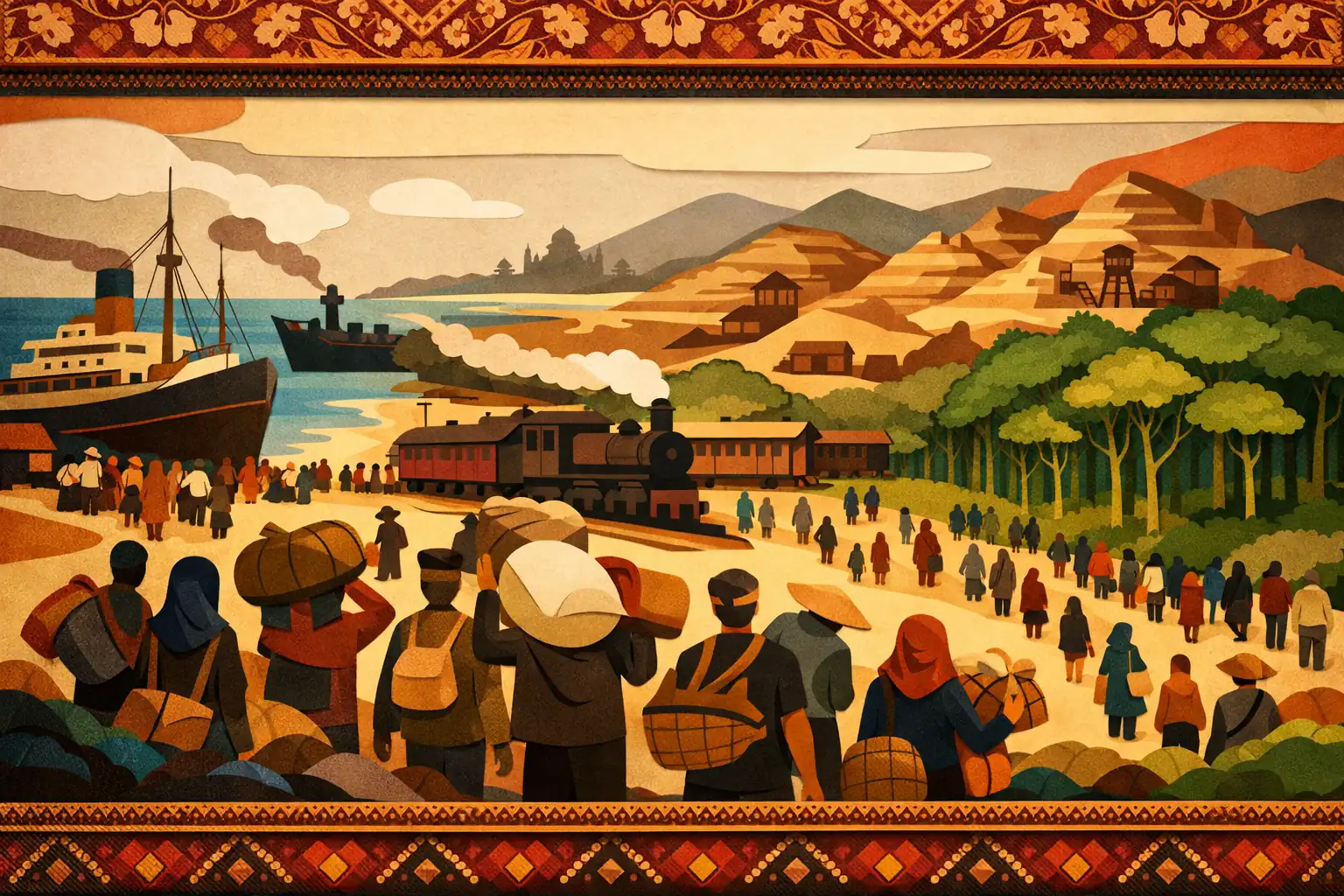
சீனா, இந்தியா மற்றும் பிற நாடுகளிலிருந்து அலை அலையாக வந்து மலேசியாவைத் தம் வீடாக்கிய குடும்பங்கள்.
இந்த அலமாரியின் கதைகள் நடந்த இடங்கள். வரைபட வடிவங்கள் தோராயமானவை.
இந்த அலமாரியில் உள்ள கதைகள்
26 எழுதப்பட்டுள்ளன, 26 விரைவில் வரும்
Why so many Chinese came: the push and pull
War, famine and a call for labour sent millions south.
பெரும் புலம்பெயர்வுகள் · 4 நிமிட வாசிப்புHokkien: the traders of Penang and Melaka
The biggest Chinese dialect group in Penang, rooted in southern Fujian.
பெரும் புலம்பெயர்வுகள் · 4 நிமிட வாசிப்புCantonese: the miners of Kuala Lumpur and Ipoh
The Cantonese built tin towns and still shape their food.
பெரும் புலம்பெயர்வுகள் · 4 நிமிட வாசிப்புHakka: the guest people
Hakka communities moved many times, leaving a trail of mining villages.
பெரும் புலம்பெயர்வுகள் · 4 நிமிட வாசிப்புFoochow: the Rajang river pioneers of Sibu
A Methodist-led community settled the Rajang delta in 1901.
பெரும் புலம்பெயர்வுகள் · 4 நிமிட வாசிப்புChinese surnames and clan houses
A family name often points to a district in China.
பெரும் புலம்பெயர்வுகள் · 5 நிமிட வாசிப்புTamil: the biggest Indian people of Malaysia
Tamil-speaking communities came across 2,000 years from the Coromandel coast.
பெரும் புலம்பெயர்வுகள் · 4 நிமிட வாசிப்புBugis: the sailor-warriors of Sulawesi
They shaped Riau, Selangor and Johor in the 1700s.
பெரும் புலம்பெயர்வுகள் · 4 நிமிட வாசிப்புMinangkabau: matrilineal people of Negeri Sembilan
A people whose family line passes through the mother.
பெரும் புலம்பெயர்வுகள் · 4 நிமிட வாசிப்புJavanese in Malaysia: from Johor to Selangor
Waves of Javanese farmers and labourers came from the 1800s.
பெரும் புலம்பெயர்வுகள் · 4 நிமிட வாசிப்புHadhrami Arabs: sayyids and merchants from Yemen
Families from Hadhramaut became traders, teachers and scholars.
பெரும் புலம்பெயர்வுகள் · 4 நிமிட வாசிப்புTin, rubber and rice: how three crops changed who lives where
A simple map of where each people settled and why.
பெரும் புலம்பெயர்வுகள் · 4 நிமிட வாசிப்புTeochew: river traders and gambier planters
Teochew pioneers opened the first plantations in Johor.
பெரும் புலம்பெயர்வுகள் · 4 நிமிட வாசிப்புHainanese: from island kitchens to coffee shops
Hainanese arrived late and built a famous food trade.
பெரும் புலம்பெயர்வுகள் · 4 நிமிட வாசிப்புThe tin rush of the Kinta valley
Tin turned Ipoh into a city and built great fortunes.
பெரும் புலம்பெயர்வுகள் · 4 நிமிட வாசிப்புLarut Wars and the Pangkor Treaty
Tin, secret societies and a British treaty in 1874.
பெரும் புலம்பெயர்வுகள் · 4 நிமிட வாசிப்புJunks to steamships: how people actually came
Chinese junks, then steamers, carried millions.
பெரும் புலம்பெயர்வுகள் · 4 நிமிட வாசிப்புThe coolie trade and credit-ticket system
Labourers paid for their ticket with years of work.
பெரும் புலம்பெயர்வுகள் · 4 நிமிட வாசிப்புMalayali: clerks, nurses and traders from Kerala
The Malayali built a name in hospitals and offices.
பெரும் புலம்பெயர்வுகள் · 4 நிமிட வாசிப்புPunjabi Sikh: police, guards and dairy farmers
The Sikhs came as soldiers and watchmen in the 1870s.
பெரும் புலம்பெயர்வுகள் · 4 நிமிட வாசிப்புThe kangany system: how rubber estates hired workers
A headman went home to find workers and bring them back.
பெரும் புலம்பெயர்வுகள் · 4 நிமிட வாசிப்புRubber: from Brazil to Malaya
Henry Ridley's seeds changed who lives where.
பெரும் புலம்பெயர்வுகள் · 4 நிமிட வாசிப்புBanjar: river people of Kalimantan in Perak and Johor
Banjar settlers cleared rice land in Perak's Kerian.
பெரும் புலம்பெயர்வுகள் · 4 நிமிட வாசிப்புAcehnese: traders and scholars of the north Sumatran coast
Acehnese settlers came to Penang and Perak.
பெரும் புலம்பெயர்வுகள் · 4 நிமிட வாசிப்புMandailing: from the hills of Sumatra to Kuala Lumpur
Mandailing leaders helped found Kuala Lumpur.
பெரும் புலம்பெயர்வுகள் · 4 நிமிட வாசிப்புSiamese in Kelantan and Kedah
Thai-speaking Buddhists have lived in the north for centuries.
Kwongsai: the Cantonese from Guangxi
A smaller group of southern Cantonese in the tin towns.
Henghua: shoemakers and rubber dealers
Henghua from Putian arrived in small numbers, famous in trade.
Hokchia: the Foochow-speaking Sitiawan settlers
A Hokchia farming colony of Perak, born in 1903.
The kongsi: Chinese democracies in Borneo
Mining companies governed themselves like republics.
Secret societies: brotherhood and trouble
Hui and tong shaped life in the early Chinese towns.
Gambier and pepper: the Teochew frontier of Johor
The Johor kangchu system made fortunes and families.
The Chinese New Villages of the Emergency
Half a million people were resettled in the 1950s.
Telugu: from Andhra to the estates
A smaller Indian group with its own language and festivals.
Gujarati: cloth sellers and wholesalers
Gujarati merchants came to Melaka before 1500 and again in the 1900s.
Sindhi: textile traders of the cities
Sindhi shopkeepers settled in port towns after Partition.
Ceylonese Tamil: clerks and teachers
Sri Lankan Tamils filled railways and schools.
Sinhalese in Malaysia
A small community, many in Buddhist temples.
Bengali, Pathan and Pakistani communities
Soldiers, watchmen and traders from the north.
Estates and railway lines: how Indian labour built Malaya
Railways, roads and ports were built by Indian workers.
The Indian Ocean crossing: ships from Nagapattinam to Penang
The voyage and its journal entries.
Boyanese: people of the island of Bawean
Boyanese came to Singapore and Johor as sailors and syce.
Rawa: Minangkabau settlers of Perak and Selangor
The Rawa settled the upper Perak and fought for tin.
Burmese in Penang
A Burmese temple and community across 150 years.
Pashtun, Pathan and Afghan traders
Afghan cloth sellers and moneylenders in the early towns.
Cham Muslims from Cambodia and Vietnam
Cham refugees came to Kelantan and Terengganu.
Japanese, Armenian, Jewish and other small communities
A few families left names on shops and schools.
Nepali, Gurkha and Bangladeshi communities
Soldiers and workers have come since the 1800s.
Vietnamese boat people and refugee families
Pulau Bidong's story, 1975 to 1991.
Filipino and Sulu families in Sabah
Cross-sea families of Sabah's east coast.
The 1957 Merdeka and how people became citizens
A neutral look at how one generation became Malaysian.
Sabah and Sarawak join Malaysia: a family story
How two Borneo lands became part of Malaysia.
இந்த அலமாரியுடன் தொடர்புடைய 6 குடும்ப வழிகள்
ஓர் இடத்தில் ஒரு வழி பரவலாகக் காணப்படுகிறது என்பதால், அங்குள்ள எல்லோரிடமும் அது இருக்கும் என்று பொருள் இல்லை. ஒருவர் யார் என்பதை அது ஒருபோதும் தீர்மானிப்பதில்லை.




