 Akar Nusa
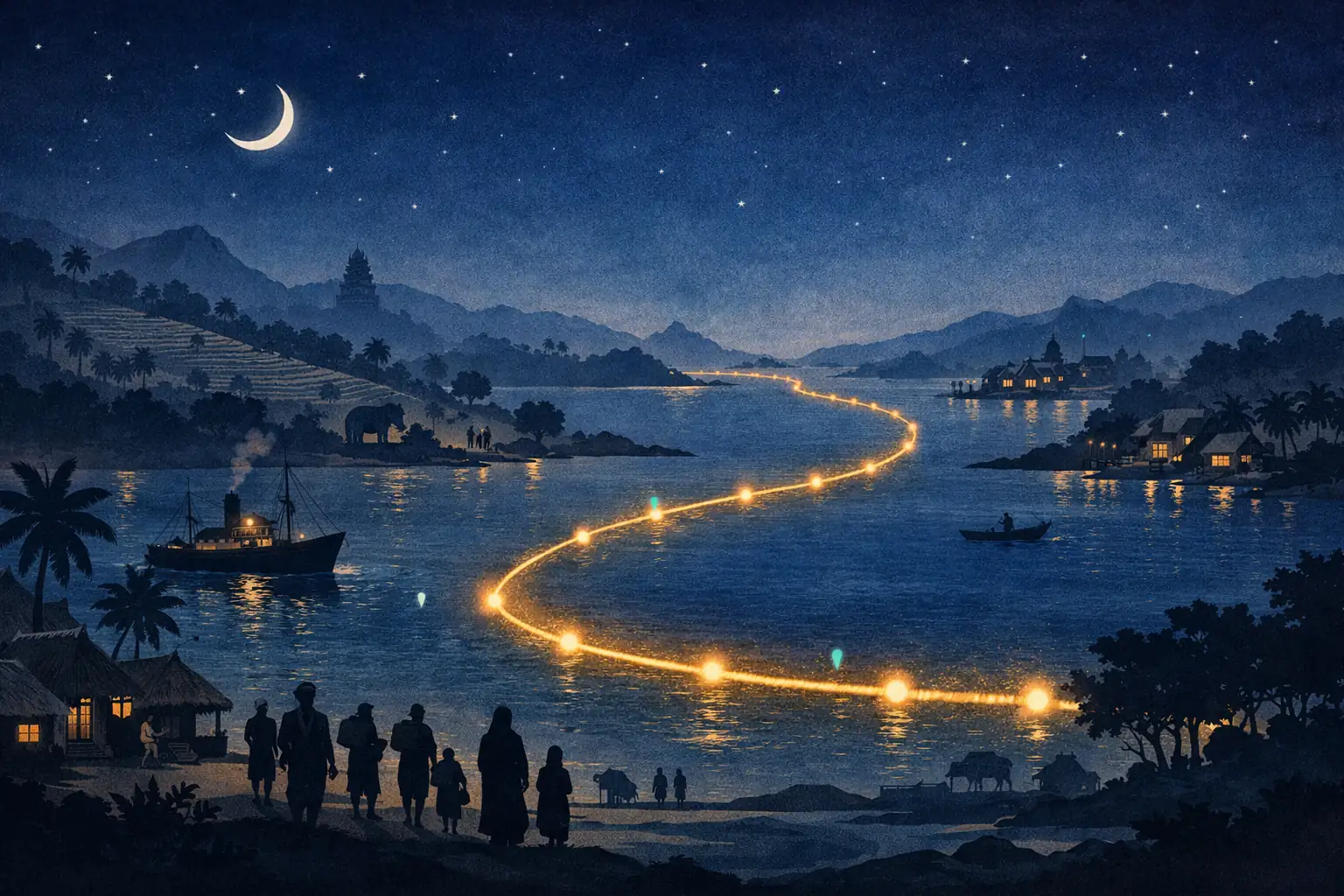
The kangany system: how rubber estates hired workers
A man in a clean white dhoti walks into his home village in south India in 1920. He has worked for years on a rubber estate in Malaya. Now the estate has sent him back to bring more workers. Neighbours listen closely, because he is someone they trust.
The story
As rubber planting spread in the early 1900s, estates needed more and more workers. The old way was called indenture. Agents in Madras and Nagapattinam recruited people directly and lent them money for the voyage. Workers signed contracts for a fixed period. Many stayed in debt and could not change employers. The indenture system was officially abolished in 1910, though its use lasted until about 1914.
The kangany system (also spelt kangani) replaced it. The estate gave recruiting work to a middleman, the kangany. He went to his own village or district and brought back workers he knew. He was paid per recruit. The worker no longer had a direct contract with the employer. The kangany became the link between them.
Most of the workers came from the Tamil areas of south India. Many Malayalis came too. Whole families came, because wives and older children could also work on the estate. By 1918, Indians made up 57 per cent of the 368,564 estate workers in Malaya.
The hard part, told plainly. Because the kangany was paid per head, some recruited people through pressure or false promises. Families lived in "lines", rows of small cubicles, often crowded and unhealthy. Wages were low: between 1884 and 1941 the standard male rate rose only from 12 to 40 Straits cents a day. Schooling was limited until the 1930s. Conditions began to improve after 1935, and in 1938 the Indian government banned all assisted migration to Malaya.
This was a labour system of its time, built by estates, agents and colonial governments, and it does not describe the people who live here now. It was also a road to a new home. Many families stayed, worked their way up, and built the Tamil and Malayali communities of Malaysia today.
Where you can still see it today
- Rows of old estate houses and Tamil schools on rubber and oil palm estates.
- Hindu temples built by estate families, on or near old estates.
- Tamil Malaysian food: banana-leaf rice, thosai, and festivals such as Thaipusam and Deepavali.
- Towns such as Bahau and Labu, where Malayali estate families settled.
- Port Swettenham, now Port Klang, where many families first landed.
What DNA can tell, and what it cannot
A region estimate may show that part of your DNA is closest to South Asia. A mother line from "The old lines of India" (M-SouthAsia) is one of the very old lines of south and central India. A father line such as L-M2481 is most common in south India.
These lines are shared by Tamils, Malayalis and many other peoples of south India. They cannot tell you whether a family came as part of the kangany system, or what job an ancestor had.
DNA does not decide race, religion or bumiputera status. Those come from family, law and culture.




