 Akar Nusa
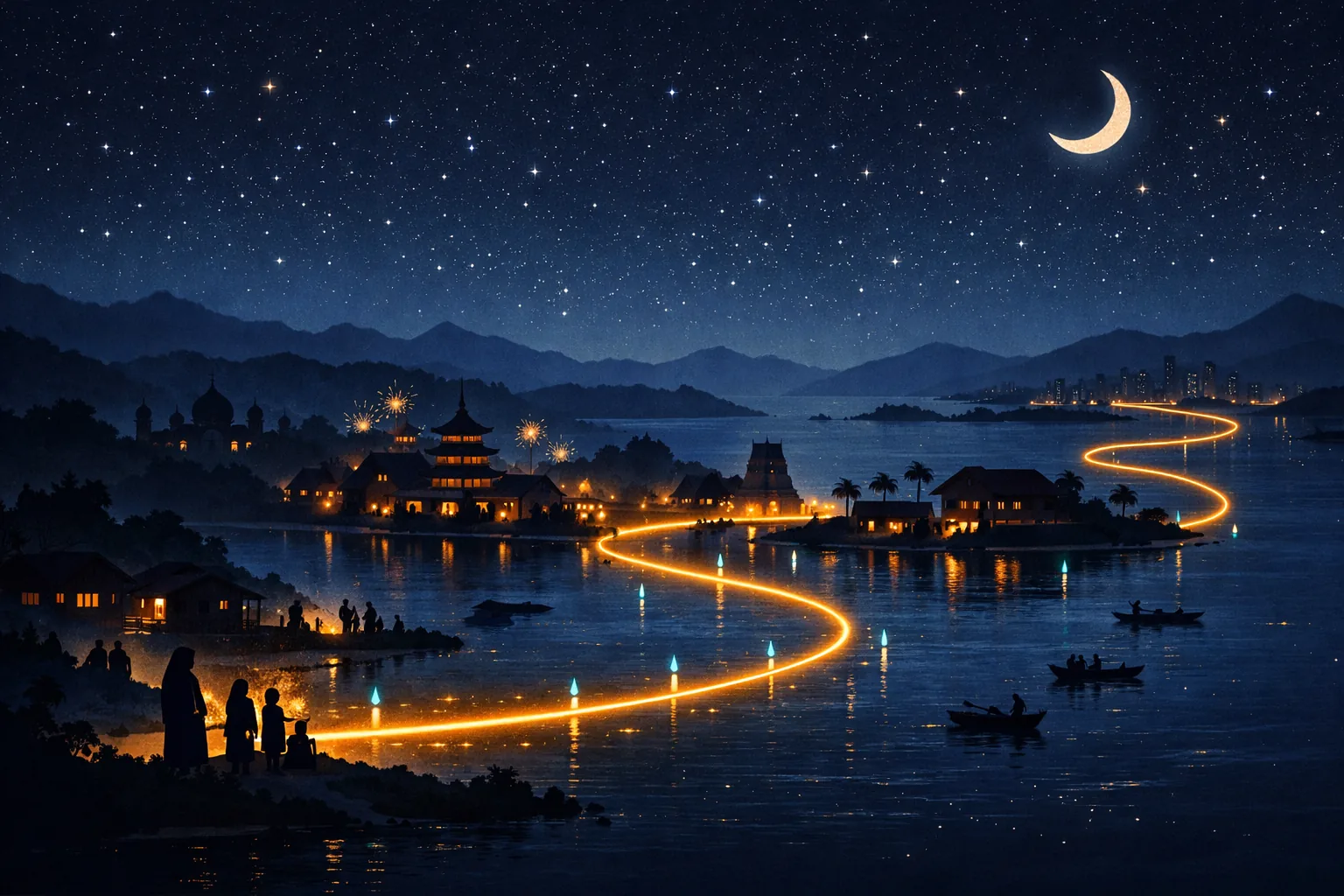
A calendar on a kitchen wall, with dates in red. A new year in the first months, a fasting month, a festival of lights, a harvest in the Borneo May and June. Every colour on the page belongs to someone's grandmother.
The story
Malaysia's holiday calendar is also a map of its families. Each community keeps its own festivals, and all of them are marked in public life.
| Festival | Community | Public holiday | |---|---|---| | Chinese New Year | Chinese | National (the second day is a state holiday in Kelantan and Terengganu) | | Hari Raya Aidilfitri | Malay and Muslim | National, two days | | Hari Raya Haji | Malay and Muslim | National | | Deepavali | Hindu and Indian | National | | Thaipusam | Hindu and Indian | Several states and territories | | Wesak | Buddhist | National | | Christmas | Christian | National | | Gawai Dayak | Dayak | Sarawak, 1 to 2 June | | Kaamatan | Kadazandusun and other Sabah peoples | Sabah and Labuan, 30 to 31 May |
Not every festival is national. Each state and territory observes 14 federal holidays, except Sarawak, which observes 13. Paid public holidays for workers also vary: 11 in Peninsular Malaysia and Labuan, 15 in Sabah and 18 in Sarawak, according to the Wikipedia article on public holidays.
Gawai Dayak and Kaamatan are harvest festivals. Gawai, on 1 June, was gazetted as a public holiday in 1964. Kaamatan was gazetted in 1960. Both were pushed forward by community leaders who wanted a shared day.
Other living traditions also have international recognition. UNESCO's lists include Songket (2021), Kebaya (2024, shared with other countries), Pantun (2025, shared with Indonesia and Brunei) and Breakfast culture in Malaysia (2024). Mek Mulung, a theatre form, is on the urgent safeguarding list (2023).
Where you can still see it today
- Open houses: at Gawai, Dayak homes welcome visitors, a custom called ngabang.
- Hongkod Koisaan in Penampang during Kaamatan.
- The kopitiam table, which UNESCO recognises as shared heritage.
- Your own street: neighbours' festivals, when a friend brings food to share.
What DNA can tell, and what it cannot
Festivals are not in DNA. They are kept by family, by teaching and by community. A person of any ancestry may celebrate any festival that their family and community keep. DNA cannot decide who belongs to a community, a festival or a faith, and it cannot decide any legal status.
Our results can show that Malaysians share deep roots with peoples across Asia. That helps to see why the calendar is so full. It does not explain any one festival.




